
Introduction to detecting nonsense
Done, starting the video
We have also e-mailed you the link, so you can come back to the video any time.
Watch the whole episode free
Leave us your details and the video will play right here on this page. We will also e-mail you the link, so you can come back to it any time. You can unlock 1 recording a month this way for free.
- The full recording, not a preview
- Downloadable materials
- No account needed
Selected for you

Find Balance Between Performance And Life · September 3, 2026
Integrity
Brain&Breakfast · August 20, 2026
Design for world peace
Brain&Breakfast · August 20, 2026
We are preparing for you in August

Find Balance Between Performance And Life · August 11, 2026
Emotions
Brain&Breakfast · July 23, 2026
czeXperiment – a lab where Czechia examines itself
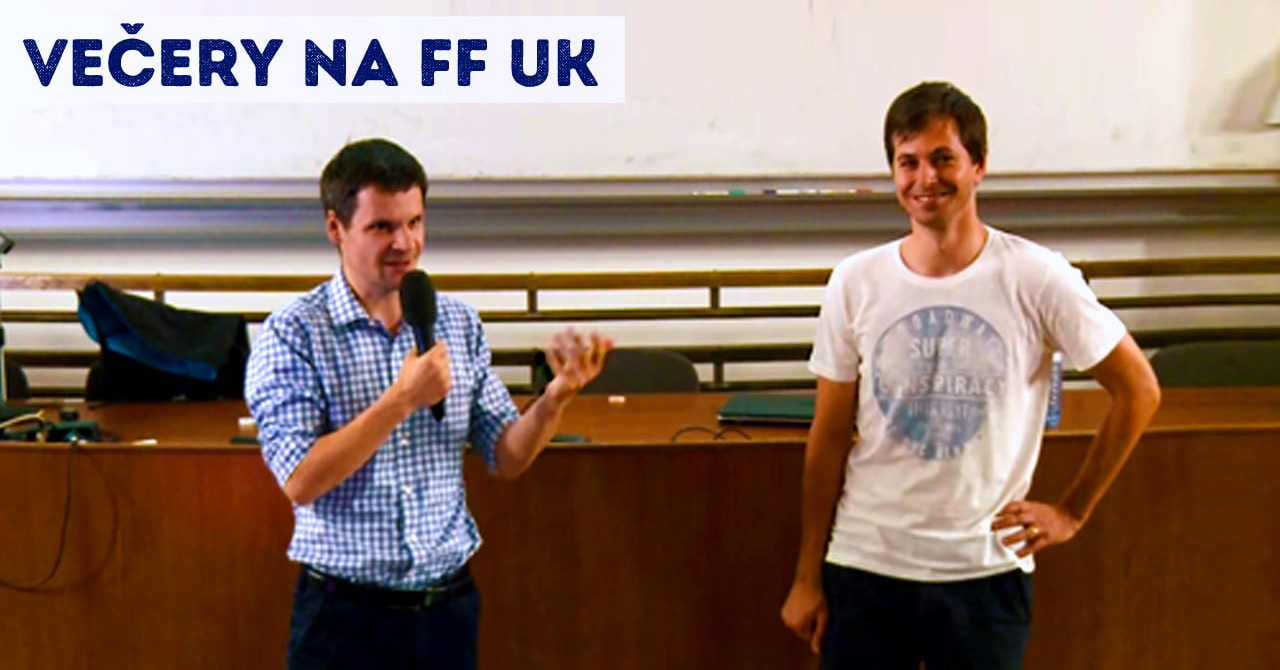
Critical thinking can be described as the ability to fish out quality and useful information from a sea of myths, half-truths, misinformation, hoaxes, fake news… basically nonsense. :-) Martin Vraný and Ondřej Havlíček could then be described as data analysts and passionate fighters against nonsense, dedicating an entire semester course to critical thinking. In their lecture “Critical thinking – an introduction to spotting nonsense” as part of the Večery na FF UK project, they showed us not only a collection of fallacies and cognitive biases our own brains invent, but also practical methods to defend against them. Simply put, an evening perfectly in the spirit of Neurazitelny.cz! :-)
What was covered in the lecture?
- What tactics journalists, politicians, and other “truth-benders” use when they want to influence our behavior and thinking
- Which somewhat unfortunate traits of our minds “help” us fall for it and what to do about them
- A brief overview of thinking errors and fallacies
- Practical tips and strategies for when someone next tries to pull a fast one on you
Who are the guests?
Martin Vraný
Martin Vraný studied philosophy at FF UK and economic analysis at VŠE – to gain a more comprehensive understanding of how the human mind works, he further studied cognitive (neuro)science and psychology at UC Berkeley and the University of Edinburgh – he currently works with data and machine learning – but he sees teaching people (for example, how to think about their own thinking) as more important
Ondřej Havlíček
Ondřej Havlíček studied informatics at VŠE and cognitive science at LMU Munich – he focused on studying human thinking, perception, and behavior from the perspectives of experimental psychology, neuroscience, and philosophy of mind – he works as a data analyst and as a researcher at the National Institute of Mental Health – he has a long-standing interest in scientific skepticism and (un)critical thinking
Selected for you
Find Balance Between Performance And Life · September 3, 2026
Integrity
Brain&Breakfast · August 20, 2026
Design for world peace
Brain&Breakfast · August 20, 2026
We are preparing for you in August
Find Balance Between Performance And Life · August 11, 2026
Emotions
Brain&Breakfast · July 23, 2026
czeXperiment – a lab where Czechia examines itself